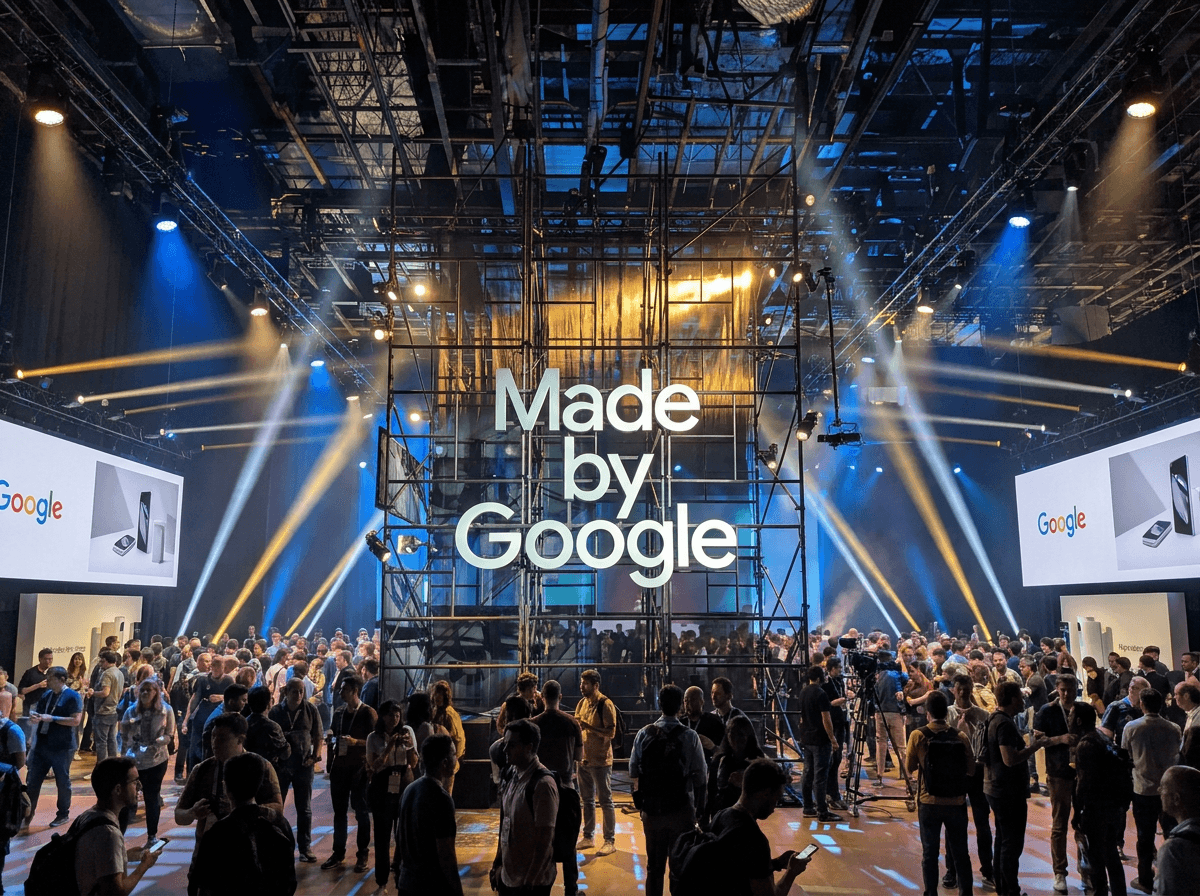
Google's August wearable event landed on August 12 in New York City, and it came packed with more than anyone expected from a single afternoon. Trevor Noah hosted, Stephen Curry showed up, and Pink Pantheress closed the show with a live performance. Somewhere between the celebrity cameos, Google actually announced a lot of hardware.
This breakdown covers what came out of Google's August wearable event: the new Pixel Watch, updated Pixel Buds, a brand-new tracking tag, and the AI features tying everything together. The phones got plenty of attention too, but the wearables carried real weight this time around.
Pixel Watch 5: The Star of the Show
The Pixel Watch 5 headlined Google's August wearable event, though at first glance, it barely looks different from last year's model. Same domed Actua 360 display. Same Gorilla Glass 5 protection. Same 41mm and 45mm case options, unchanged in thickness and weight. Google clearly decided the design didn't need touching this cycle.
What changed sits mostly under the hood. A new Snapdragon W5 Gen 2 Accelerated chip brings a 12 percent CPU boost, and RAM jumps from 2GB to 3GB according to Google's own materials. Battery capacity grew slightly too, though not enough to shift Google's stated estimates: still around 30 hours on the smaller model, 40 on the larger one, with always-on display active.
The real headline feature is GPS accuracy. Google says a new cloud-based post-processing system delivers twice the route-mapping accuracy in tricky environments like dense cities, correcting tracks after a workout using building models and atmospheric data. Google claims this beats the Apple Watch Ultra 3 and Garmin Fenix 8 Pro, based on its own internal testing from pre-production units. That's worth flagging as a company claim rather than independent verification, at least until outside reviewers get hands-on time.
Health tracking expands too, with new blood pressure trends and insulin resistance monitoring joining the lineup, alongside workout logging features clearly aimed at Garmin's territory. Some of these tools require a Google Health Premium subscription, a detail worth knowing before assuming everything ships free.
Pricing climbed alongside the upgrades. The 41mm Bluetooth model starts at $399, up $50 from last year. The 45mm version starts at $429. A limited Stephen Curry edition arrives September 3 at $579, custom band included.
Pixel Buds and the New Pixel Tag
Google's August wearable event didn't stop at watches. Pixel Buds Pro 2 gained a new Olive color option, available immediately, alongside a September software update improving adaptive noise cancellation based on how the buds actually sit in your ear. Both Pixel Buds Pro 2 and the cheaper Pixel Buds 2a are picking up Gemini voice controls too, letting owners adjust settings with simple spoken commands like asking for more bass.
The bigger surprise from the event was Pixel Tag, Google's long-awaited answer to Apple's AirTag. Priced at $29 and arriving in November, it plugs a gap Google has left open for years, despite already running its own Find Hub tracking network without a matching first-party tracker.
Details remain somewhat limited ahead of release. Google confirmed ultra-wideband support, enabling more precise location tracking than standard Bluetooth alone, plus a built-in speaker for locating misplaced items nearby. Whether it can compete directly with Apple's ecosystem lock-in remains an open question, but the pricing at least undercuts expectations.
Between the earbuds update and this new tracker, Google used its wearable event to round out an ecosystem that's historically leaned entirely on phones and watches. Accessories finally got their moment.
Gemini and Software Across the Lineup
Hardware wasn't the only focus of Google's August wearable event. Software updates, largely built around Gemini, touched nearly every device on stage. Proactive Assistance, previously known as Magic Cue, now handles more scenarios with a richer interface, surfacing flight details, calendar previews, and restaurant bookings through simple contextual prompts.
Live Translate picked up meaningful range too, now supporting over 70 languages with near real-time translation when triggered. That's a substantial jump for anyone traveling or communicating across language barriers regularly.
One accessibility update stood out from the rest. Live Transcribe now supports American Sign Language, using the Pixel Camera to translate signed conversations into text in real time. It's a genuinely useful addition for anyone who relies on sign language and wants another way to communicate without typing everything out manually.
None of these software features are exclusive to the Pixel Watch 5 or the new earbuds. They spread across Google's device lineup broadly, which is really the point behind pairing hardware announcements with an AI-first strategy. Google wants Gemini woven through everything, not confined to one product category.
Where the Pixel 11 Phones Fit In
The Pixel 11 lineup, including a new foldable, technically shared the stage at this same event, even though the wearables took center stage in coverage afterward. Google's newest phones ship with an all-glass camera bar 40 percent thinner than before, a larger 48-megapixel wide sensor offering notably improved light sensitivity, and the new Tensor G6 chip powering 30x zoom through the telephoto lens.
Baseline configurations now start at 12GB of RAM and 256GB of storage, a small but welcome bump from previous generations. Since the phones already received extensive coverage elsewhere, the short version matters most here: Google didn't neglect phones during its wearable event, it just let the watch and accessories dominate the conversation instead.
Conclusion
Google's August wearable event turned out to be less about flashy reveals and more about steady, deliberate expansion. The Pixel Watch 5 kept its familiar shape while quietly adding GPS accuracy claims and deeper health tracking. Pixel Buds got smarter noise cancellation and Gemini voice control. Pixel Tag finally closes a gap Google left open for years.
None of it feels revolutionary on its own. Together, though, it paints a picture of a company building out its wearable ecosystem methodically, rather than chasing one headline feature per year. For anyone deciding whether to upgrade, the details here should make that decision easier, even if nothing at Google's August wearable event demanded an immediate purchase.