
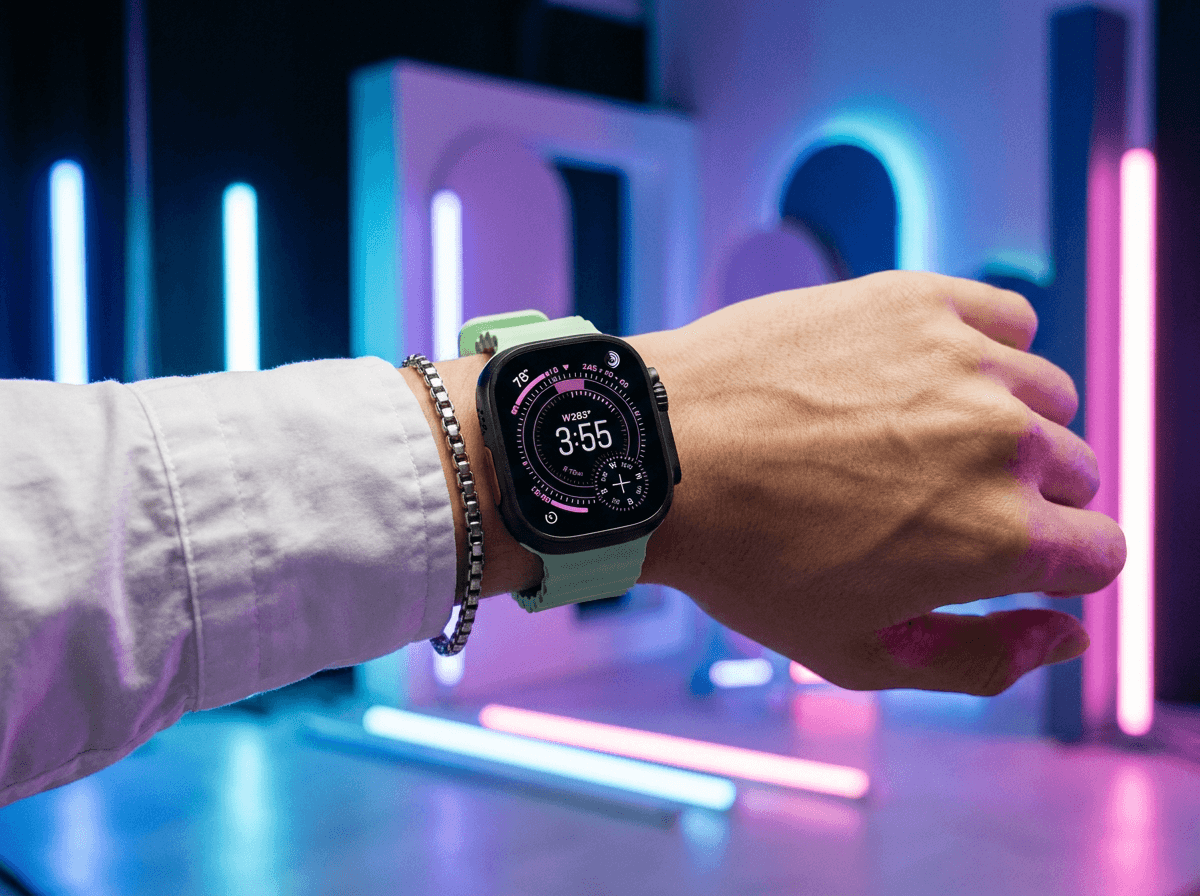
Apple didn't reinvent the Ultra line this year. It refined it, carefully, in the places that actually mattered. The Apple Watch Ultra 3 keeps the same rugged shape people already know, but adds satellite messaging, a brighter screen, and better battery life underneath.
That combination makes this review worth paying attention to, especially if you've been holding onto an original Ultra or an Ultra 2. Here's what changed, what didn't, and whether the Apple Watch Ultra 3 earns its place at the top of Apple's lineup.
Design and Build
The Apple Watch Ultra 3 sticks with the 49mm titanium case that's defined this line since the beginning. It's still a big watch. It still feels sturdy on the wrist. Reviewers who've spent months with it note it stays comfortable for 24/7 wear, even through sleep tracking, and avoids the top-heavy feel some bulkier sports watches carry during runs.
One change stands out more than the spec sheet suggests. Apple trimmed the bezels slightly, growing the active screen area by roughly 5 percent inside the same case size. That doesn't sound dramatic on paper. In practice, longtime Ultra 2 owners have described it as an immediately noticeable difference, sharper and more spacious at a glance.
Compared to rivals like the Garmin Fenix 8 Pro, the Apple Watch Ultra 3 wears less bulky on the wrist, according to hands-on testing from multiple outlets. That's a solid advantage for anyone switching from a dedicated sports watch and worried about comfort during long days or overnight wear.
Color options remain limited, just two finishes on a single case size. That's consistent with previous Ultra models, so nobody switching from an older version should be surprised here.
Nothing about the design radically departs from what came before. That's mostly fine. Apple built a comfortable, rugged watch two generations ago, and the Apple Watch Ultra 3 mostly just polishes that formula further.
Display and Battery Life
Apple upgraded the screen technology here, moving to an LTPO3 panel that's both brighter and more power-efficient than before. Peak brightness reportedly reaches 3,000 nits in direct sunlight, dimming down to just 1 nit in the dark, useful for anyone checking the time in bed without waking a partner.
Battery life sees a noticeable, if modest, bump too. Apple rates the Apple Watch Ultra 3 at 42 hours under typical use, up slightly from the Ultra 2. Real-world testing with always-on display, notifications, workouts, and sleep tracking active puts that closer to 1.5 to 2 days per charge, according to hands-on reviews. Switching to a dedicated low-power mode stretches that considerably further, with some testing showing up to 72 hours possible.
That's a clear step forward, though it still trails dedicated endurance sports watches from Garmin, COROS, and Suunto by a wide margin. Ultra-distance athletes chasing multi-day battery life on long expeditions will still find better options elsewhere.
For most people, though, the daily numbers matter more than extreme edge cases. Getting through a full day of workouts, notifications, and sleep tracking without anxiety about battery percentage is a meaningful quality-of-life improvement, and the Apple Watch Ultra 3 delivers that comfortably now.
Combined with the brighter, roomier display, this generation feels like Apple addressing the two most common complaints about the previous model directly, rather than chasing flashier, less practical upgrades.
Health, Safety, and Satellite Features
This is where the Apple Watch Ultra 3 makes its biggest leap. Satellite connectivity finally arrives here, running on Globalstar's low-Earth-orbit network. Even without cell coverage, wearers can trigger SOS regardless of their carrier plan status. Two-way texting and Find My location updates work over satellite too, though those specific features require an active carrier plan to function.
For hikers, backcountry skiers, or anyone spending time off-grid, that's a substantial safety upgrade. Previous Ultra models offered similar SOS functionality through the phone's connection, but satellite independence from cellular coverage is new territory for this device.
Health tracking expands this generation as well. A new sleep score, rated out of 100, gives a simpler at-a-glance summary of sleep quality. Daytime hypertension notifications join the health suite too, flagging signs worth discussing with a doctor. Apple also introduced Workout Buddy, an AI assistant that offers spoken encouragement and updates during runs and workouts.
5G connectivity rounds things out, alongside the usual watchOS ecosystem benefits like Apple Pay, a massive app catalog, and tight iPhone integration that competitors still struggle to match.
Together, these additions push the Apple Watch Ultra 3 further into adventure-safety territory, not just fitness tracking with a rugged case wrapped around it.
How It Performs for Runners and Athletes
GPS and compass accuracy remain excellent on the Apple Watch Ultra 3, matching or exceeding dedicated running watches in most head-to-head testing. Native sports tracking has improved steadily too, now offering customization and data screens that rival specialist brands.
Where it still falls behind is technical depth. Elevation data, advanced training analytics, and native navigation tools for serious mountain routes remain thinner than what Garmin, COROS, or Suunto offer out of the box. Multiple reviewers who tested the watch across road runs, trail routes, and pool swims noted this gap consistently, even while praising everything else about the experience.
The app ecosystem helps bridge that gap somewhat. Third-party running apps like WorkOutDoors add proper mapping and navigation tools missing from Apple's native software, while apps like Footpath and YouRace fill other specific training gaps.
For most runners and gym-goers, none of this matters much day to day. The Apple Watch Ultra 3 handles typical training, from tempo runs to strength sessions, without any obvious weakness. It's really only ultra-distance athletes doing multi-day events or technical mountaineering who will feel the difference between this and a dedicated specialist watch.
Should You Buy the Apple Watch Ultra 3?
If you're already carrying an original Apple Watch Ultra, this upgrade makes a strong case. Satellite messaging alone represents a significant safety leap, and the brighter, larger-feeling display noticeably improves daily use.
Coming from an Ultra 2, the decision gets more complicated. Several of this year's features, including hypertension notifications and the sleep score, have also rolled out to older Apple Watch models through software updates. The core hardware gains, mainly satellite independence, battery life, and the display, are worthwhile but somewhat incremental rather than transformative.
For iPhone owners specifically wanting one watch that handles training, daily life, and emergency situations equally well, the Apple Watch Ultra 3 remains the strongest all-around option Apple has ever built.
Conclusion
The Apple Watch Ultra 3 doesn't try to out-spec dedicated endurance watches, and it shouldn't. What it offers instead is broad versatility: strong fitness tracking, dependable safety features through satellite connectivity, and the smoothest software experience in wearables today.
It's an easy recommendation for iPhone users with active lifestyles who want one device covering nearly everything. For athletes chasing the deepest training data or multi-day battery life, specialist brands still lead. For everyone else, the Apple Watch Ultra 3 earns its reputation as the most complete smartwatch on the market right now.


